
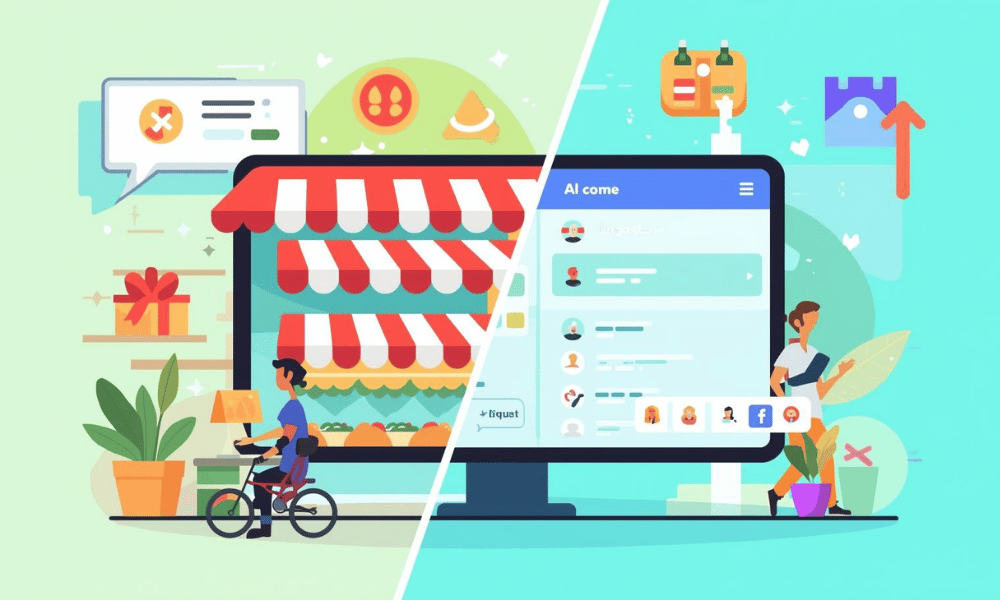
When it comes to growing your restaurant’s brand, having your own online ordering system usually offers more lasting benefits than relying solely on third-party delivery apps (restaurant aggregators). Third‑party apps like Uber Eats or DoorDash can quickly drive orders, but they charge high fees and keep your customer data. In contrast, a branded website or app gives you full control of the customer experience, 100% of the sales revenue, and a direct line to diners – all of which build loyalty and brand recognition. In fact, industry research shows about twice as many customers primarily order through restaurants’ own apps or websites (16%) as through delivery apps (8%). This suggests direct online ordering already leads in consumer preference, and experts (including restaurant marketing agency ARSNL Media) recommend focusing on first-party channels for sustainable growth.
How Online Ordering and Restaurant Aggregators Work
- Online Ordering (Direct): This means customers order through your own branded website, mobile app, or even a phone/SMS system. You control everything – your menu, pricing, promotions and the checkout process. Any delivery can use your own drivers or a partner service. Because you own the channel, you also collect all the customer data (email, order history, etc.).
- Restaurant Aggregators: These are third‑party platforms (like Uber Eats, DoorDash, Grubhub, etc.) that list many restaurants in one app or site. They handle order-taking, payment processing, and often delivery logistics (either with their fleet or yours). Customers find you on the app, order, and the aggregator pays you (minus commissions). Aggregators charge restaurants a commission (often 15–30% per order) and may also charge customers delivery fees.
Both channels can boost sales, but they work very differently. Aggregators give instant exposure to millions of hungry diners: Statista forecasts about 80.6 million Americans used food delivery apps in 2022, rising to 110.8 million by 2027. That built‑in audience is hard to ignore. On the other hand, your own ordering site takes longer to grow traffic, but every order goes straight to you (no middleman).
Pros and Cons of Restaurant Aggregators
- Pro – Instant Reach: Aggregators connect you with a huge audience of app users. Instead of having to attract each customer yourself, you appear alongside other restaurants whenever someone opens the app. For example, a local eatery in L.A. used DoorDash’s “featured” placement to run 70% of its business through DoorDash during the pandemic. This kind of visibility and promotion is hard to achieve on your own.
- Pro – Built‑in Marketing & Delivery: Listing on an aggregator automatically puts your restaurant in front of many customers. The platform often provides tools for promotions, ads, or loyalty deals, and may even assign a marketing rep to help. Delivery is simpler too: you can use the app’s drivers or your own staff, depending on your needs. Aggregators effectively become a one-stop solution for taking and fulfilling orders.
- Con – High Commissions: Most food apps charge 15–30% of each order as a fee. On a $100 order, that can be $15–30 gone to the app, plus extra delivery fees. Those costs cut deeply into your profit. For a restaurant making ~$15,000 in digital sales a month, a 25% fee would be $3,750 in commissions. Over time, paying out so much per order “stops paying off” once you’ve built some local customer base. Indeed, Flipdish reports that 89% of diners would rather order directly from a restaurant if they knew how much fees were being paid to apps.
- Con – No Customer Data: Aggregator platforms keep your customers’ contact info. You get paid for the order, but you don’t get their emails, birthdays or order history. That means you can’t follow up with targeted emails or loyalty messages. In the long run, this makes it hard to build a loyal fan base. (Studies show even a 5% increase in repeat customers can boost sales by ~75%.) Instead, the app uses that data to promote its own brand and deals.
- Con – Brand Visibility: On an app, your restaurant is one tile among many. Customers often remember the app they used (Uber Eats, DoorDash, etc.), not your restaurant’s name. The look and feel of your brand can’t shine through – you’re stuck in the platform’s standard menu layout and fonts. For example, a vibrant restaurant like Miss Lily’s might have a colorful website, but its Uber Eats listing is plain and nondescript. This lack of branding means missed opportunities to build recognition and trust.
- Con – Competition and Restrictions: Third-party apps put your competitors literally one tap away on the screen. Even if you pay for premium placement, another nearby restaurant is a click away, ready to steal orders. Aggregators also often enforce “price parity” (you can’t charge more on your own site than on the app) and limit how you present items. You lose creative freedom in menu design and pricing strategy.
In summary, aggregators are great for speed and reach, especially for new or small restaurants that need orders right away. But the trade-offs – steep fees, lost data, and weaker brand impact – make them less ideal for long-term growth.
Which Strategy Builds Your Brand Better?
For brand growth and long-term success, owning your ordering channel is usually the stronger strategy. Why? Because brand growth is about turning one-time orders into loyal fans, and that requires control, data and ongoing connection – all things you get with your own platform.
- Retention and Loyalty: Direct orders keep customers coming back. As one industry summary said, “aggregator discounts attract deal-hunters, not loyal guests. But with restaurant online ordering, you can pair loyalty programs with personalized offers, turning every transaction into a relationship”. In other words, you build lifetime value.
- Data-Driven Marketing: Owning customer data means smarter marketing. You can segment your audience, send targeted emails, and know what works. Aggregators simply don’t let you do that.
- Brand Recall: Every email receipt or marketing message from your domain or app builds your name. Over time, diners start thinking of you first, not the app. That matters a lot as competition grows.
On the other hand, ignoring aggregators entirely can leave money on the table, especially in the early days. Aggregators have become a key sales channel for many restaurants nationwide. In fact, some industry analysis now calls them “a key source of sales” rather than just advertising.
In summary, a balanced approach often wins: use third-party apps to reach new diners (especially when you’re starting out or launching in a new area), but rapidly nurture them on your own channels for repeat business. Cookware company La Pino’z Pizza and beverage brand Boba Bhai, for instance, built strong repeat order rates by focusing on direct ordering and loyalty.
Conclusion
In the end, the choice isn’t strictly either-or. Own your brand by investing in a seamless, branded online ordering experience, and you’ll see better margins, more loyal customers and stronger brand recognition. At the same time, don’t neglect aggregators’ short-term reach – they can fill seats and orders today. ARSNL Media advises clients to view aggregators as one channel in a multi-faceted strategy, not the whole strategy. Use apps to attract and familiarize diners with your menu, but always direct them back to your platform for the best deals and service.


Comments are closed